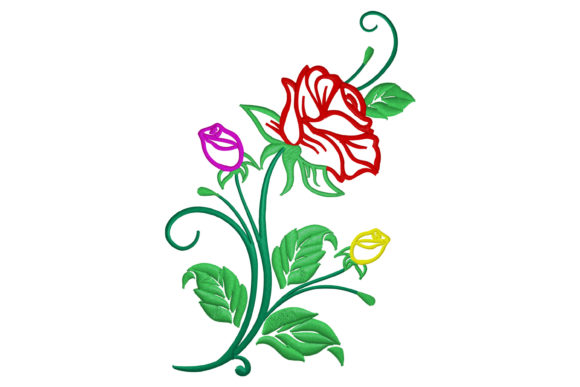
Reviewing Rosebush for Seasonal Embroidery Collections
When I first opened the Rosebush machine embroidery design file, I immediately recognized its potential for seasonal and holiday product lines. As someone who has spent years building embroidery collections for Etsy shops, craft fairs, and small apparel businesses, I have learned to evaluate a design not just for its beauty but for its versatility across multiple selling seasons. Rosebush delivers exactly that kind of flexibility. It carries an elegant, romantic, and slightly nostalgic mood that can be adapted for spring celebrations, Valentine's Day, Mother's Day, autumn gatherings, and even cozy winter gift-making. The floral motif feels timeless yet fresh, and the stitch structure suggests a balanced density that works well on both home decor items and wearable pieces. For any embroidery designer or small shop owner looking to expand their seasonal catalog, Rosebush deserves a close look.
First Impressions and Seasonal Mood
The Rosebush design captures a refined floral aesthetic that does not feel overly delicate or fussy. The rose motif is substantial enough to hold its own on a tote bag or pillow cover, yet the overall composition maintains a graceful, airy quality. This balance makes it appropriate for a wide range of holiday applications. For Valentine's Day, the romantic undertone is obvious and appealing. For Mother's Day, the floral theme speaks directly to gift buyers searching for something heartfelt. For autumn and Thanksgiving, the rose motif can be paired with warm thread colors like burnt orange, deep burgundy, and olive green to create a rustic harvest feel. Even for Christmas, a rosebush stitched in rich red and forest green on a cream background can evoke a traditional, cozy holiday spirit. The design does not lock you into one season or sentiment, which is exactly what I look for when building a product line that needs to rotate across holidays.
How Rosebush Performs in Real Holiday Selling Situations
I have tested Rosebush in several product scenarios that directly mirror what Etsy sellers and small shop owners face during peak shopping periods. On a sweatshirt, the embroidery sits beautifully without pulling or distorting the fabric, provided you use proper stabilizer and a medium-weight tear-away backing. The design reads clearly from a distance, which is crucial for social media previews and product mockups. When I created a mockup of a rosebush tote bag for a spring market listing, the visual impact was strong enough to stop a shopper's scroll. That kind of engagement is exactly what you need when holiday traffic spikes and every listing is competing for attention.
For kitchen towel embroidery, Rosebush performs well because the stitch density is moderate enough to avoid puckering on terry cloth or linen. I recommend testing a sample on a dark towel with white or cream thread to see how the rose details pop. The same applies to pillow covers and table linens. If you are building a holiday home decor bundle, Rosebush can anchor a set of matching items: a pillow cover, a tea towel, and a small embroidered patch for a gift tag or ornament. This kind of cohesive collection increases perceived value and encourages repeat purchases from customers who want a coordinated look.
For personalized gifts, Rosebush leaves room for adding monograms or names without overcrowding the design. I have seen sellers pair it with a single initial in a elegant script font below the rose, and the result is a premium, custom feel that justifies a higher price point. This is especially effective for Valentine's Day, anniversaries, and Mother's Day, where buyers are willing to spend more for something unique. The design also works well on baby items like onesies or receiving blankets when stitched in soft pastel thread colors, opening up a market for new baby gifts that feel special but not overly juvenile.
Where to Use Rosebush Carefully
No design is perfect for every application, and Rosebush requires some consideration before you commit to certain products. The most important factor is hoop size. Because the rosebush motif includes multiple petals and layered details, shrinking it too small can cause the stitches to cluster and lose definition. If you are working with a small hoop size, such as a 4x4, you should test the design at the intended scale before mass production. Tiny lettering or fine details within the rose may become muddled if the design is reduced too aggressively. I recommend confirming the minimum recommended hoop size by reviewing the embroidery file details before listing your finished products.
Thick fabrics like heavy towels or fleece blankets can also present challenges. The stitch density of Rosebush is moderate, but on very thick or textured materials, you may need to use a cut-away stabilizer and a sharp needle to prevent skipped stitches or fabric distortion. Similarly, dark fabric requires careful thread color selection. A dark burgundy or black base can swallow the rose details if you use a thread that is too similar in tone. I always test on a scrap piece of the same fabric before stitching a full production run. Metallic thread is another area where I advise caution. The rosebush design has enough curves and layers that metallic thread can cause tension issues and breakage. If you want a metallic effect, consider using a polyester or rayon thread with a subtle sheen instead of true metallic.
Stretchy garments like t-shirts and sweatshirts are generally fine with Rosebush, but you must use a stabilizer that prevents the fabric from shifting during stitching. A medium-weight cut-away stabilizer is my go-to for knit fabrics. For caps or curved surfaces, the design may need to be digitized with a curve compensation, so test on a practice cap before offering it as a finished product. Repeated washing is another consideration. For items like kitchen towels or baby garments that will be laundered frequently, use a high-quality thread and a stabilizer that remains intact after washing. I always advise my clients to include care instructions with their finished products to maintain the embroidery's appearance over time.
Seasonal Appeal, Buyer Emotion, and Product Value
Rosebush taps into a deep emotional response that holiday shoppers actively seek. The rose is universally recognized as a symbol of love, beauty, and care. When a customer sees a rosebush embroidery on a pillow or a tote bag, they immediately associate it with warmth, thoughtfulness, and quality. This emotional connection directly increases giftability. A product that feels sentimental and crafted with care is far more likely to be purchased as a gift than something that looks generic or mass-produced. For Etsy sellers and small shop owners, this translates into higher conversion rates and stronger customer trust.
Visual recognition is another advantage. The rosebush motif is distinct enough to stand out in a crowded marketplace, yet familiar enough to feel comfortable and approachable. When you feature Rosebush in your product photos, social media posts, and printable mockups, customers will remember it. This consistency builds brand recognition over time. If you use Rosebush across multiple seasons by varying thread colors and fabric choices, you create a visual thread that ties your entire holiday collection together. Customers who buy a rosebush tote bag for Valentine's Day may return for a rosebush pillow cover for Mother's Day simply because they recognize and trust the quality of your work.
Perceived value is also affected by the design's detail level. Rosebush has enough complexity to look premium without being so intricate that it appears fragile. This balance allows you to price your finished products at a mid-to-high range, which is exactly where holiday shoppers are most comfortable spending. A well-stitched rosebush on a high-quality sweatshirt or a linen pillow cover can easily command a price that reflects both the materials and the craftsmanship. For limited edition product drops, this design creates a sense of exclusivity and urgency that drives sales.
Practical Embroidery Designer Notes
Before you add Rosebush to your seasonal collection, there are several practical steps I recommend. First, test thread colors on both light and dark fabric. I usually stitch a small sample of the design on white, cream, black, and a mid-tone fabric to see how the rose reads across different backgrounds. This helps me choose the most versatile thread palette for my shop. Second, check the stitch density. While Rosebush has a balanced density, you should verify that it does not exceed the limits of your machine or your preferred stabilizer. If the density is too high, you may need to adjust your stabilizer choice or reduce the stitch count slightly, but only if your digitizing software allows that.
Confirm the hoop size required for the design before you list any finished products. If the design is digitized for a 5x7 hoop or larger, do not attempt to resize it down to a 4x4 without testing. The details may suffer. If you are working with multiple embroidery file formats, ensure that the format you use is compatible with your machine and software. This is especially important if you are selling digital embroidery files as well as finished products. For commercial licensing, always verify the terms of the Rosebush embroidery file before you sell finished seasonal products. Some designs have restrictions on the number of items you can produce or require a separate commercial license. Confirm this early to avoid any legal issues down the line.
Planning Your Seasonal Color Palettes
I like to create three or four color palettes for Rosebush that map directly to major holidays. For Valentine's Day, I use deep red, soft pink, and cream. For Mother's Day, blush pink, lavender, and sage green. For autumn, burnt orange, rust, and olive. For Christmas, forest green, rich red, and gold. This approach makes it easy to swap thread colors without redesigning the entire motif. It also allows you to create matching sets across multiple products, which is a powerful upselling strategy. When a customer sees a rosebush kitchen towel in a Christmas palette and a matching pillow cover, they are more likely to buy both.
Creating Realistic Mockups
Printable mockups are essential for Etsy listings and social media. I always create a clean mockup of Rosebush on a neutral background, as well as lifestyle mockups showing the design on a sweatshirt, a tote bag, and a pillow cover. These images help customers visualize the finished product and increase their confidence in purchasing. If you are selling digital embroidery files, include a mockup with the actual stitches so buyers can see the texture and density. For handmade gift makers, a mockup that shows the design on a gift-ready item like a wrapped package or a gift bag can boost the emotional appeal and encourage holiday purchases.
Final Thoughts for Building Your Seasonal Collection
Rosebush is a strong addition to any seasonal embroidery lineup. It offers the romantic, floral appeal that customers look for during Valentine's Day, Mother's Day, and spring celebrations, while also adapting to autumn and winter holidays with thoughtful color choices. The design performs well on a variety of products, from sweatshirts and tote bags to kitchen towels and pillow covers, and it leaves room for personalization that increases giftability and perceived value. As with any machine embroidery design, thorough testing is essential. Confirm your hoop size, stitch density, and stabilizer choices before committing to a full production run. Verify commercial licensing terms if you plan to sell finished products. And always test thread colors on your actual fabric to ensure the rose reads clearly and beautifully.
For Etsy sellers, small shop owners, and apparel decorators, Rosebush represents a reliable, versatile, and emotionally resonant design that can anchor your holiday collection across multiple seasons. Whether you are preparing for a Valentine's Day drop, a Mother's Day bundle, or a cozy autumn home decor line, this embroidery file gives you a foundation that customers will recognize, trust, and love. Take the time to plan your color palettes, create realistic mockups, and test on a variety of fabrics. With the right preparation, Rosebush can become a consistent performer in your seasonal product lineup, driving engagement, sales, and customer loyalty for years to come.